Buy a Photo Booth in the Netherlands — Own Your System for Trade Fairs and Corporate Events
Amsterdam, Utrecht and Rotterdam are ninety minutes apart, which is why a Dutch event calendar fills up faster than almost anywhere else in Europe. Two fairs in one week is normal here, and that is exactly where the rental model breaks: one system, two dates, one supplier who can only serve one of them. Owning the terminal solves the scheduling problem and removes the per-event branding setup at the same time. UpReach designs its own hardware line, has it manufactured to CE and ISO 9001 standard, and has built its photo-booth software in-house since 2016. You own the hardware; we configure it to your identity and deliver it ready to run.

GDPR-compliant · CE and ISO 9001 certified · Ready to operate out of the case · EU AI Act-ready




Why buy your system from UpReach
Your interface, in Dutch or English
Screens, consent wording, print layout and the sender address of every automated email carry your design — in Dutch, English or both, with the visitor choosing at the start. Dutch agencies run the terminal under their own name. Because the platform is ours, a new campaign look is configured in the cloud CMS instead of ordered from a vendor.
Current-generation AI inside our own software
Face swap, AI background removal without a green screen, 2D-to-3D depth and GlamBot slow motion run inside our platform. The image models behind them are the leading current ones and are updated continuously, so a terminal bought for this season still looks current three seasons later. AI modules are booked modularly on a credit basis.
Specified for a dense event calendar
UpReach designs its hardware to its own specification and has it manufactured to CE and ISO 9001 standard. Steel housing, industrial-brightness display, serviceable printer bay. A Dutch system often works eight to twelve dates a year, so the build-up and tear-down cycle — not the single event — is the real load test.
Where the Dutch rental model runs out
- Overlapping weeks at RAI, Jaarbeurs and Ahoy mean the best rental stock is committed months ahead.
- Every booking re-charges branding, configuration and delivery you already paid for last quarter.
- Rental spend stays in marketing OPEX; nothing is capitalised at year end.
- Visitor data runs through a supplier platform your privacy officer has to assess again each time.
- Agencies hiring hardware hand the margin to the rental company instead of keeping it.
- A capital asset with a known depreciation schedule instead of an open rental line — from EUR 4,990 net.
- Two events in the same week become an internal scheduling question.
- Branding stays loaded; the next fair needs a campaign swap, not a fresh setup.
- One documented data setup, reviewed once by your privacy officer and reused across campaigns.
- Operational lease as a third route if a monthly rate fits the budget better than a purchase.


Who buys a photo booth in the Netherlands
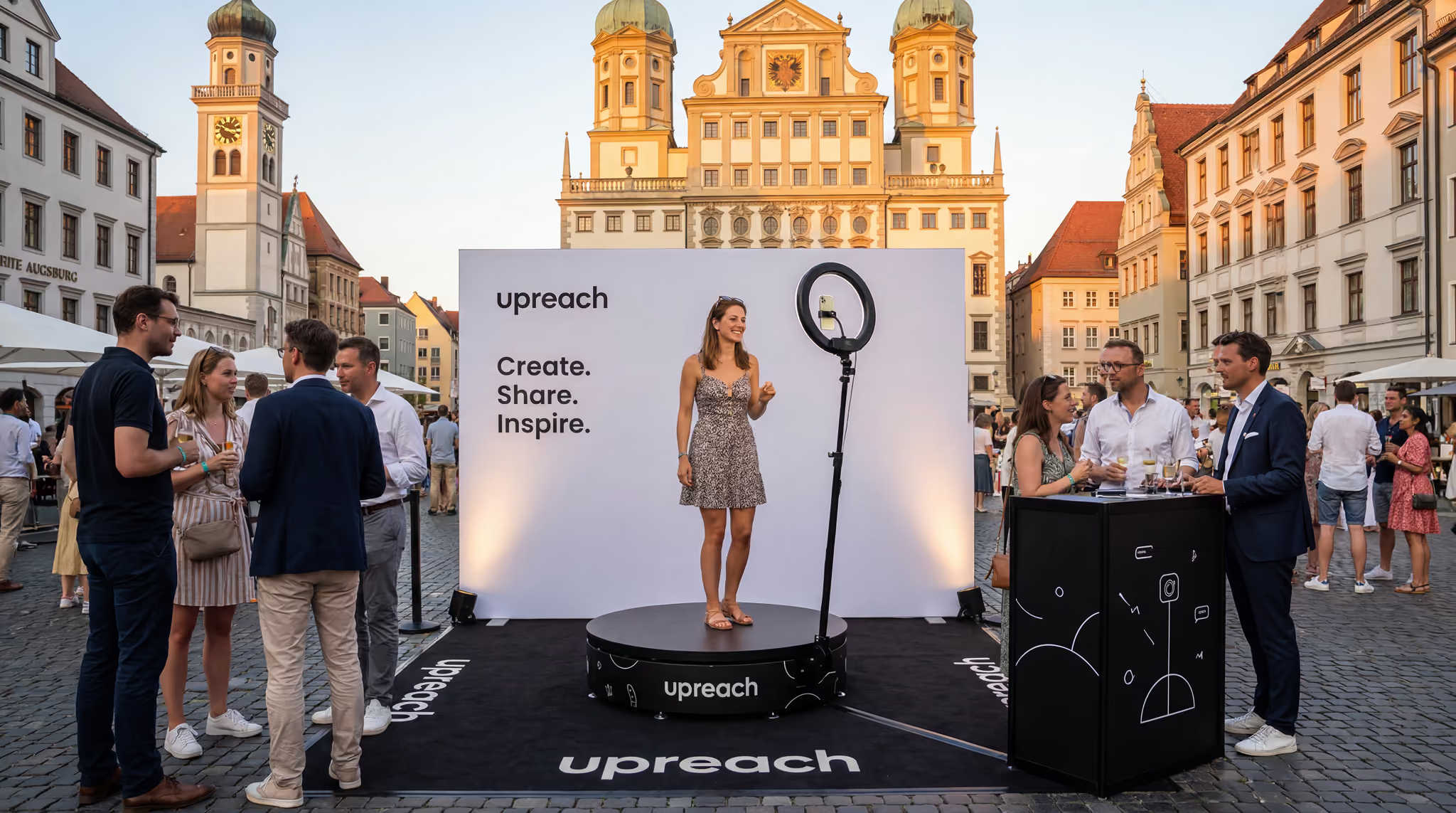
Agencies and event suppliers building a fleet
Dutch agencies run tight margins on hardware they hire in, and the short distances between Amsterdam, Utrecht, Rotterdam and Eindhoven mean an owned system can serve two clients in a single week. From roughly four to six billed event days, a Compact at EUR 4,990 net has covered its cost; after that each booking is margin. The white-label configuration matters just as much: the terminal, screens and follow-up emails carry your agency name, so the system reads as part of your own offering rather than a rebadged hire.
Corporates with a fixed fair calendar
A brand exhibiting at RAI Amsterdam and Jaarbeurs Utrecht in the same season, plus internal kick-offs, hackathons and recruitment days, pays for the same activation four or five times a year. Ownership turns that into a fixed asset with a known cost per event, which is easier to defend in a budget round than a fluctuating rental line. Different departments reuse the same terminal with their own campaign profile, so marketing, HR and sales are not each hiring separately.
Permanent installations in retail and hospitality
Flagship stores on the Kalverstraat, hotel lobbies, stadiums and visitor centres run the same touchpoint every day, which no rental model covers sensibly. The StudioCabin V2 at EUR 16,990 net is bought for exactly this case: an enclosed studio that stays in place, collects opted-in contacts continuously and needs no crew. Remote diagnostics and over-the-air updates keep it running, and the campaign look is changed centrally when a season or a promotion ends.
Where owned systems earn their keep in the Netherlands
RAI Amsterdam anchors the international calendar with IBC for broadcast and media, Intertraffic for mobility infrastructure and METSTRADE for the marine industry, alongside a heavy congress programme. Jaarbeurs Utrecht covers the national trade-fair calendar across construction, healthcare, hospitality and consumer sectors, and its central position makes it the easiest venue in the country to reach. Ahoy Rotterdam adds large-format expos, energy and industry summits and arena-scale events. Around those three, corporate demand concentrates in the Randstad and in Eindhoven's technology cluster. Because all of these sit within about ninety minutes of each other, one owned system realistically covers eight to twelve dates a year — the utilisation level at which the purchase argument settles itself.
The right system for every application
From compact selfie stations for pop-up events to walk-in studio cabins for impressive trade fair appearances. All compliant with CE and ISO-9001 standards.
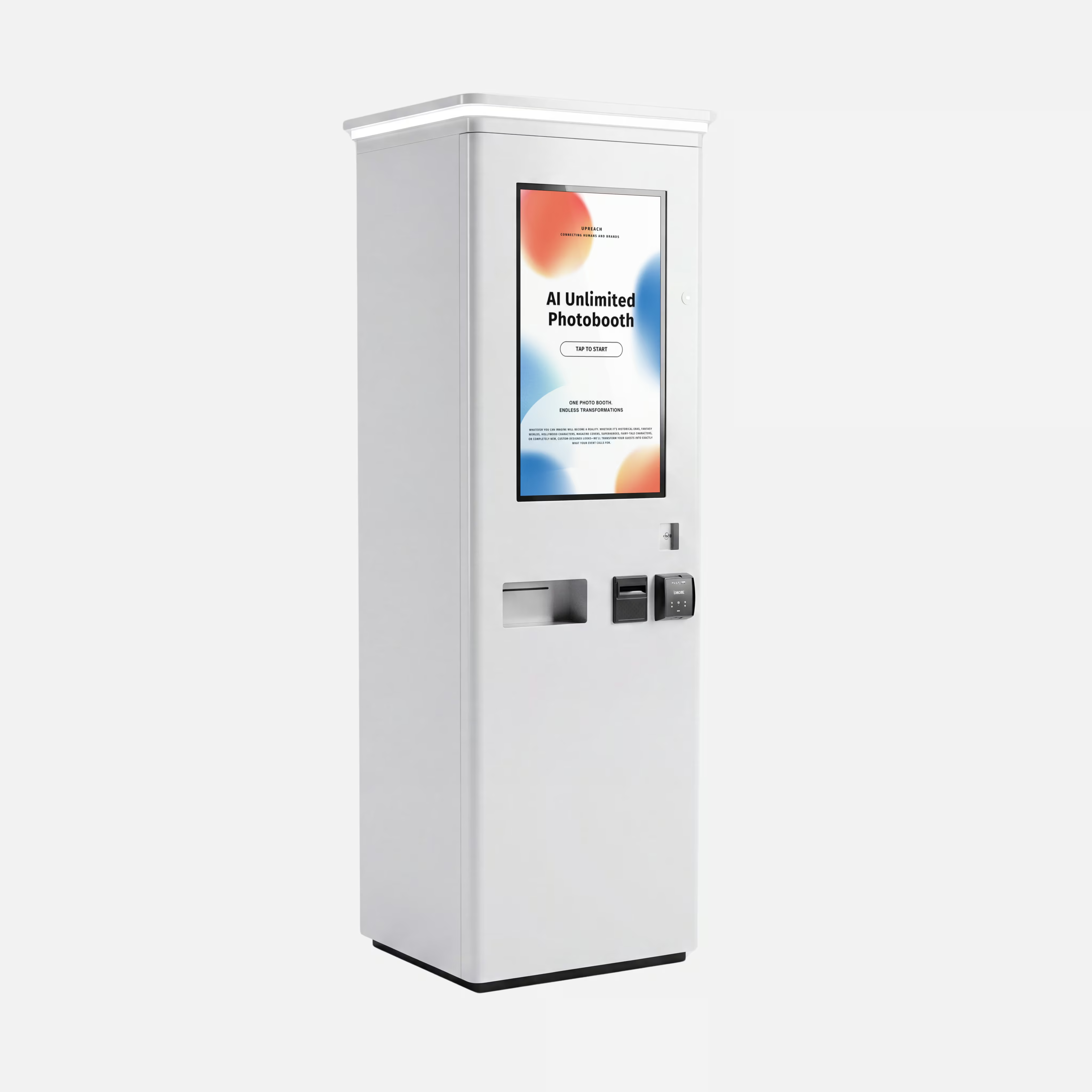
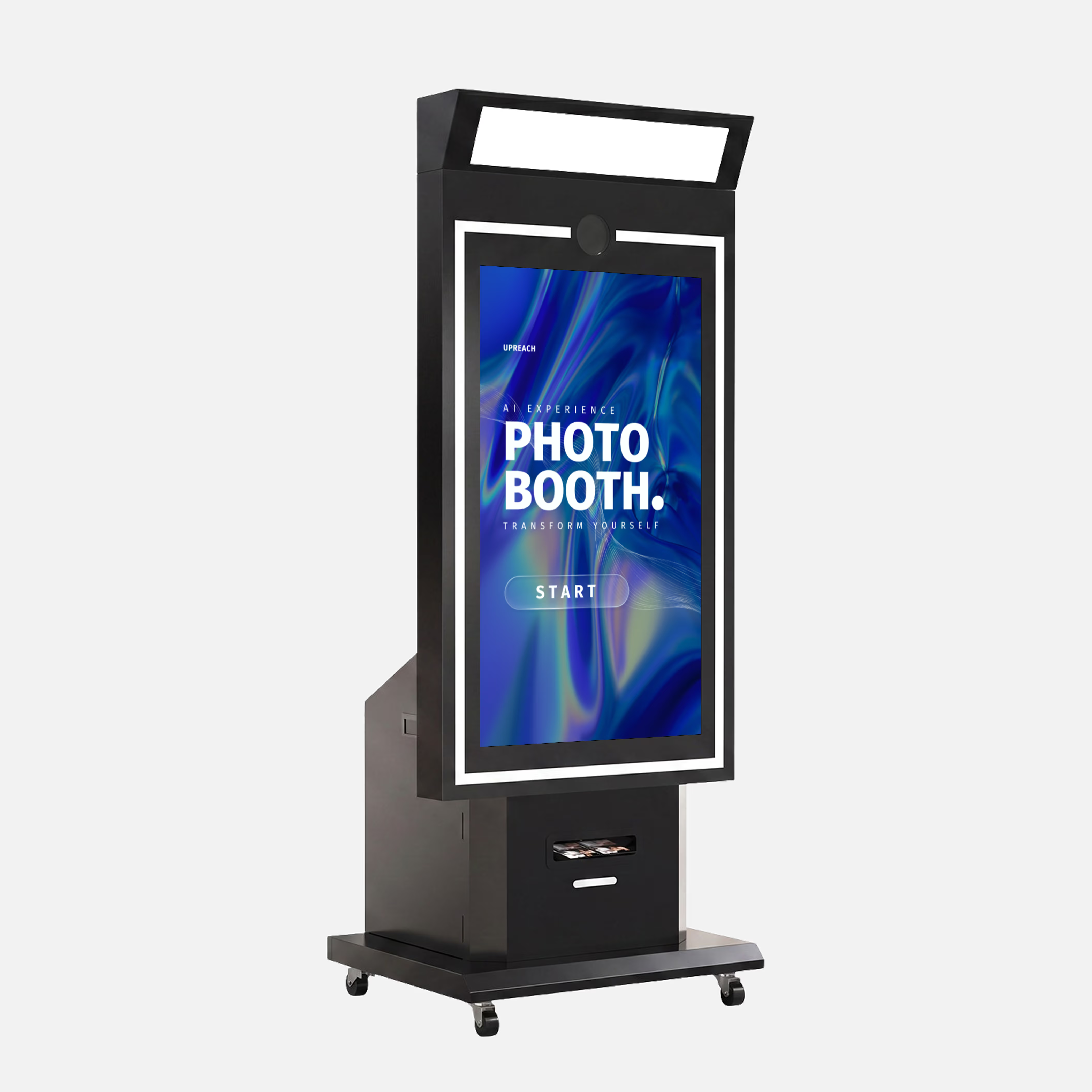
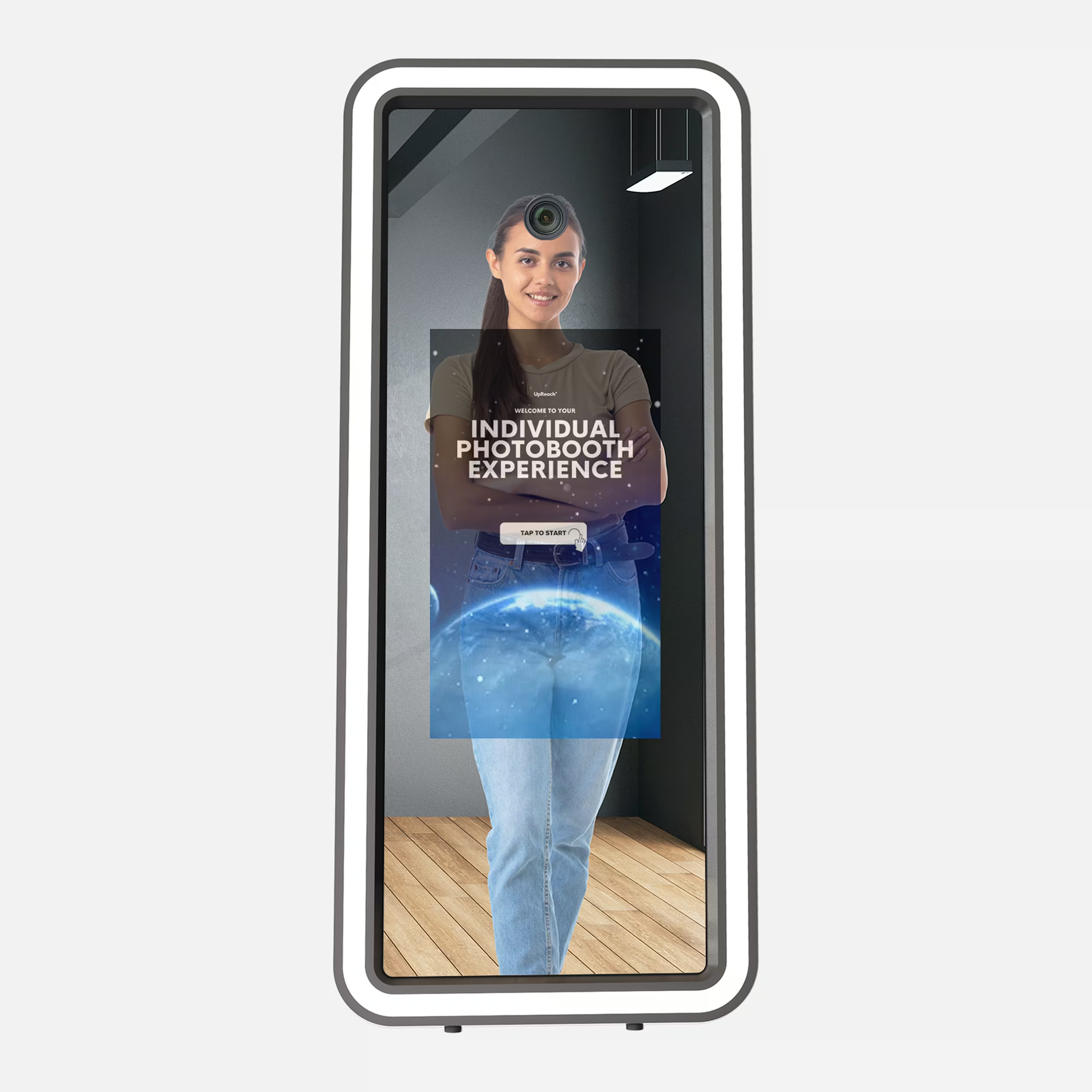
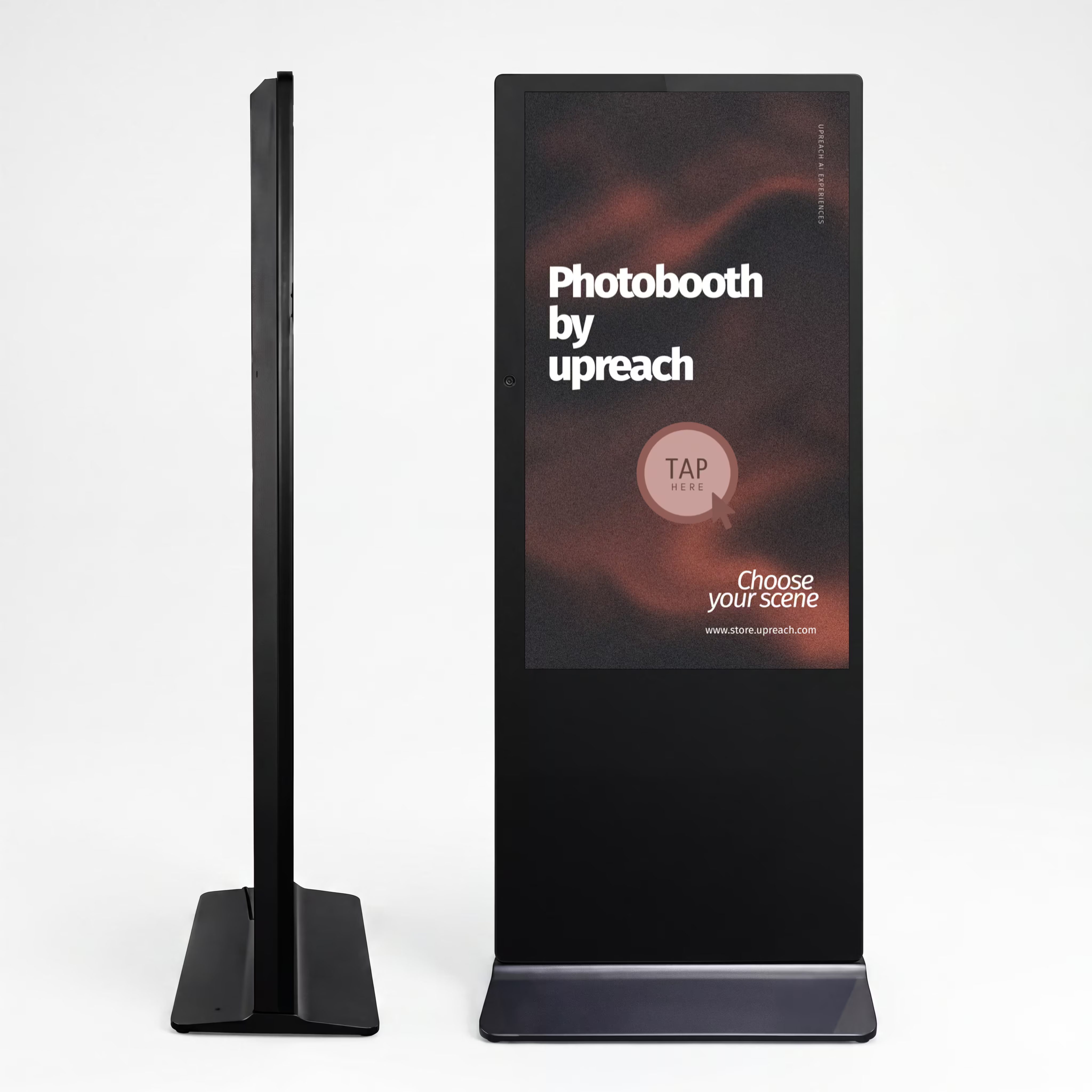
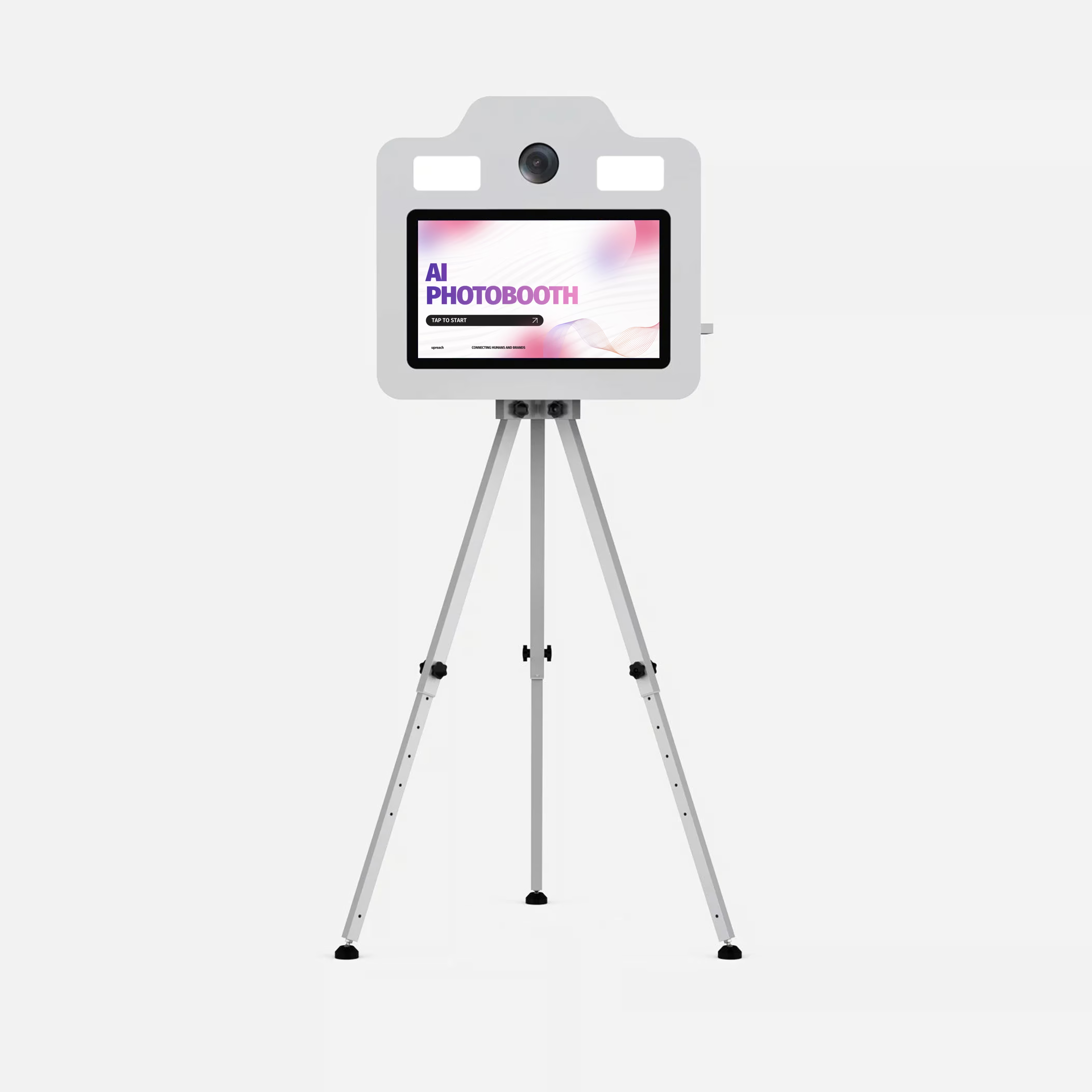
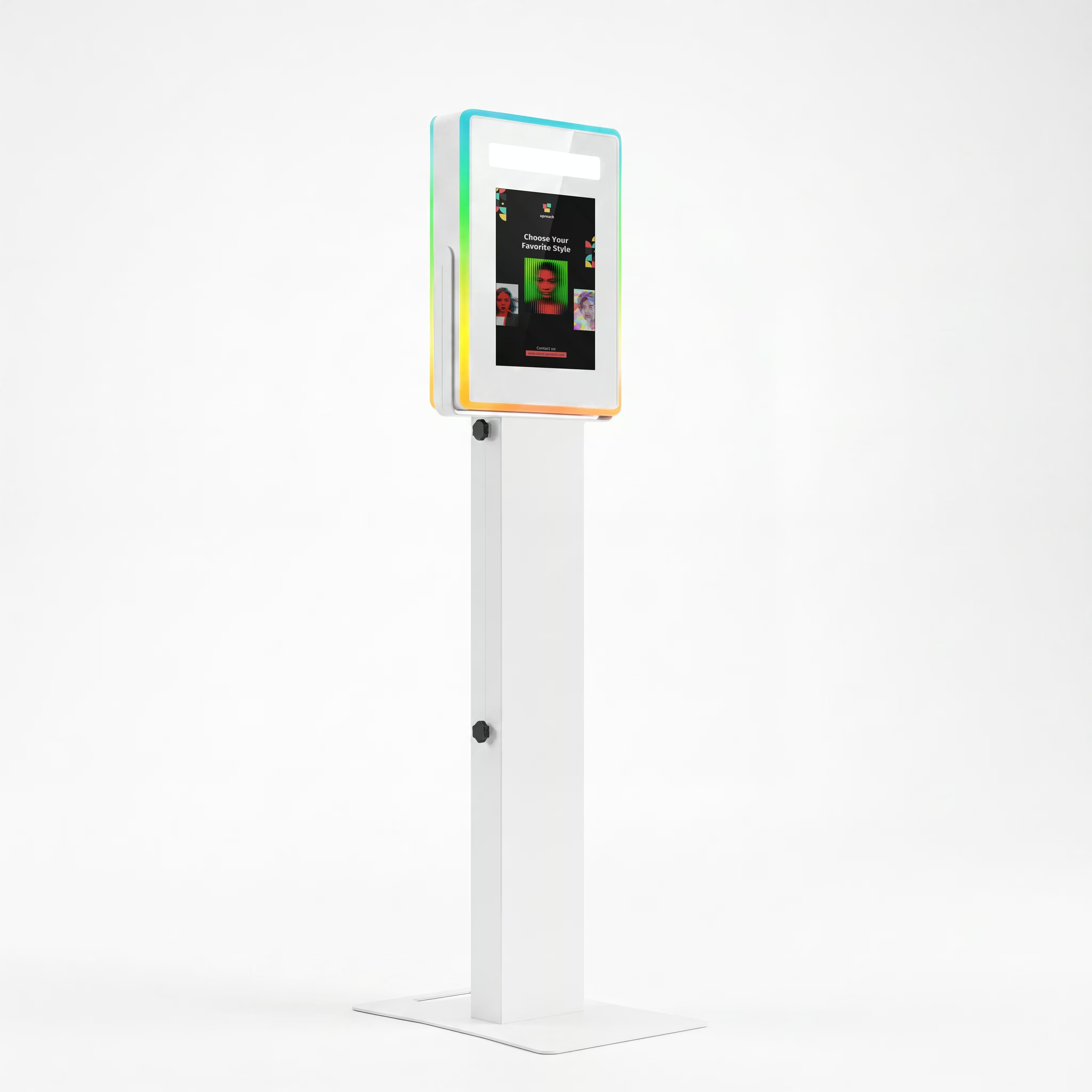
Which system you buy depends on the format you repeat most often. These are the ones Dutch teams order most.
- AI photo booth — the standard purchase for lead capture at RAI and Jaarbeurs
- Mirror photo booth — for retail, fashion and press formats
- 360-degree photo booth — for high-reach social campaigns
- Selfie station — compact touchpoint for smaller stands and offices
- GIF booth — short loops for social-first activations
- Photo booth with instant print — tangible giveaways on the stand
- All systems and technical specifications
- Not ready to buy? Compare the rental route first
Projects with measurable results


Get your own photo booth in 3 easy steps
Specification instead of a catalogue order
The first call covers event volume, venues, branding and CRM. From that we recommend a hardware class and the AI modules that match your calendar — with a dense Dutch schedule, throughput and service access usually matter more than the largest screen.
Configuration before delivery
Your corporate identity, screens, consent wording and CRM connection are loaded before the system leaves Berlin. Delivery to a Dutch address is a short road haul inside the EU single market, with no customs formalities. Lead time on request.
Ownership, support and updates
The hardware belongs to you. Twelve months of the software ecosystem are included, then an annual contract continues. Updates arrive over the air, the fleet dashboard covers most support remotely, and spare parts reach Dutch addresses within a day's road haul from Berlin.
Adapts to your budget plan
Every system in our product range can be acquired exactly as dictated by your controlling department and project scope.
Buy
The perfect sweet spot for frequent activators and agencies. No ongoing cloud or license costs.
Lease
Looking to conserve your capital? Leasing keeps your fixed costs manageable, and payments are fully tax-deductible on your balance sheet.
Rent
Perfect for a special annual event or for thorough testing. Available for booking from a single day.
Inquire Without Obligation
Our team will get back to you with a recommendation within 24 hours.
Buy or rent a photo booth in the Netherlands — which fits?
Rent if you run one or two activations a year; buy if you run four or more. The Dutch market pushes teams over that line quickly, because RAI Amsterdam, Jaarbeurs Utrecht and Ahoy Rotterdam are within ninety minutes of each other and the fair season concentrates into a few months. Two events in the same week is a normal occurrence here, and it is precisely the situation a rental contract cannot solve: one booked system serves one date. An owned terminal turns that into an internal scheduling decision. The second factor is repeat setup cost — branding, screens and CRM configuration are re-quoted with every rental, but configured once on a system you own. The third is data: your privacy officer reviews one documented flow instead of assessing a new supplier platform per campaign.
Common questions about buying in the Netherlands
By freight forwarder from our German logistics network, in a secure flight case, to the Dutch address you name — office, warehouse or venue. The Netherlands is inside the EU single market, so the shipment moves like a domestic one: no customs clearance, no duty, no import VAT at the border. Distances are short, with Amsterdam, Utrecht and Rotterdam all within a day's road haul from Berlin. Lead time is confirmed on request, and three to four weeks is a comfortable window because we configure your corporate identity, consent wording and CRM connection before dispatch. If the first delivery goes straight to RAI Amsterdam, Jaarbeurs Utrecht or Ahoy Rotterdam, tell us early: all three run time-slot systems during build-up and the slot is booked with your stand builder. On site the system needs a 230 V socket.
From roughly four to six event days a year, and Dutch calendars reach that faster than most. A rental quote for a multi-day fair is never only the day rate: transport to the hall, the branding setup and the AI configuration are re-quoted for every booking, so one appearance at RAI or Jaarbeurs regularly lands in the four-figure range net. Against EUR 4,990 net for a Compact or EUR 6,990 net for a Pro V1, the crossover sits inside the first year for teams with a regular schedule. The compression of the Dutch season matters too: because venues are close together, an owned system can work two events in one week, which a single rental booking cannot. On the ownership side, include storage, internal transport and the software annual contract after twelve months.
Yes, and operational lease is a familiar structure for Dutch marketing and facility budgets. What you lease is identical to what you would buy — same specification, same configuration, same delivery — with the cost spread across an agreed term at a fixed monthly rate. Because instalments are usually recorded as operating expenses rather than an asset purchase, the accounting picture changes while the hardware does not; your accountant or tax adviser confirms the treatment for your entity and reporting standard. Rates are quoted case by case, since hardware class, term and the AI modules you book all feed into them. The software terms stay the same either way: twelve months of the UpReach software ecosystem are included, an annual contract continues afterwards, and AI modules remain credit-based and modular.
Two separate lines. The UpReach software ecosystem — capture engine, cloud CMS, white-label frontends, consent and lead-gating layer, CRM connection and fleet dashboard — is included for twelve months with every purchase and continues on an annual contract afterwards, with the conditions stated in your quote before you buy. That contract keeps over-the-air updates coming, so an owned system does not freeze at its delivery state while the platform moves on. AI modules are the second line and are always credit-based and modular: face swap, AI background removal, 2D-to-3D depth and GlamBot are booked per campaign, so the cost follows the volume your events produce rather than a flat rate. The remaining costs are physical consumables, prints and media, bought as for any professional printer.
Yes, both. The full flow is configured in Dutch, English or a bilingual setup where the visitor selects at the start — that covers the touchscreen interface, the consent wording, the confirmation screen and the automated email. At international fairs such as those at RAI Amsterdam the bilingual variant is the usual choice, because a Dutch-only interface costs you contacts from foreign visitors. White-labelling goes further than a logo: the sender address, print layout, microsite and housing wrap can carry your agency brand or your client's, with no UpReach mark anywhere. Because the interface runs on our own software rather than a licensed template, language and legal wording are configuration work rather than development. A second language costs nothing extra, and changes can be pushed to a terminal you own while an event is running.
How does the AVG and GDPR position work when we own the system?
Every system ships with a manufacturer warranty; the term and scope are stated in your quote. Because the hardware is designed to our own specification and manufactured to CE and ISO 9001 standard, wear parts are standardised rather than improvised, which is what makes component-level service possible at all. Support runs on two levels. Remotely, the fleet dashboard shows system status, error states and software version, so most issues are diagnosed and resolved without a site visit. Physically, spare parts such as printers, media, lights, cameras and touch panels ship from our Berlin operation, and the Netherlands is roughly a day's road haul away; transit is confirmed per case rather than promised in advance. For owners running two fairs in one week we recommend keeping a spare printer and one media set in your own store.
Need more help?
Our team will respond within 24 hours.