Live marketing in B2B — from interaction to pipeline
Live formats are almost always budgeted on gut feeling. After the event the report shows visitor numbers — not how many of them reached the pipeline. An UpReach terminal closes that gap: it gives visitors a reason to stop, and translates that moment into a verified record with consent, a timestamp and a CRM connection. The interaction stays what it was. It just becomes measurable as well.

More than 200 B2B brands from across Europe trust UpReach — from agencies to enterprise corporations.




Why live marketing without a data layer evaporates
A live format creates attention in the moment someone is standing in front of it. Without capture, the contact ends right there. The usual workaround — collecting cards, scanning badges — delivers contacts without context and without defensible consent.
UpReach reverses the order: the visitor gets a result they actually want (an AI-generated portrait in your brand design) and releases their data to receive it. The data gating sits before the image output. A fleeting contact becomes a record your sales team can find in the CRM.
The difference is not the technology, it is the sequence: value first, then data.
Three levers for measurable live marketing
Interaction with a payoff, not scattergun reach
A plain photo does not pull anyone across the aisle. An AI portrait in your brand design does. The incentive decides the footfall — and footfall decides the cost per lead. If you have nothing to give, you collect nothing.
Every contact with documented consent
The consent flow runs on the terminal: separate checkboxes for contact data, image rights and marketing, none pre-ticked. Every lead carries a cryptographically secured timestamp — the documentation your data protection officer needs if anyone asks.
Results that survive the CFO meeting
The cloud dashboard shows interactions, opt-in rate, cost per lead and sharing rate — per format, per location, per campaign. That lets you compare live marketing against paid channels instead of defending it as a brand budget.


Where live marketing works in B2B
The leading trade fair
At a leading fair you compete with hundreds of stands for the same visitors. The terminal works as a pull mechanic: it creates footfall while your team holds conversations instead of scanning badges. Leads flow into the CRM in parallel.
The multi-city roadshow
On a roadshow, comparability is what counts. Every terminal runs the same campaign, and the analysis comes back consolidated and split by location. You see which city delivers — and can plan the next tour on that basis.
Brand activation at the point of sale
In retail, the moment in front of the shelf decides. The terminal stands as a permanent installation, swaps campaigns by remote update and captures opt-ins with no staff at the device.
Why UpReach for live marketing
Our own photo booth software since 2016
The interface on the terminal, the delivery email and the data form all run in your corporate design. No UpReach branding on the way to your customer. We configure the screens before dispatch — your team sets up nothing on site.
Current-generation AI features
Face swap, background removal without a green screen and 2D-to-3D depth run inside our own software, into which we integrate the leading image models and keep them current. Your campaign is not tied to an ageing engine.
Our own system line, built to our specification
UpReach designs the hardware itself and has it manufactured to its own specification — CE and ISO 9001. Steel housings, industrial-brightness displays, studio lighting: dimensioned for ten-hour show days, not for consumer use.
Live marketing as a data-led channel
Why visitors hand over their data willingly
The mechanic is not a trick, it is an exchange: someone who receives an image they want to keep and share will accept a short form for it. Placement decides the outcome — with the form before the output, opt-in rates typically sit at 60 to 80 per cent. Placed after it, they fall below 30. Every additional mandatory field costs around 15 per cent conversion.
From record to sales pipeline
Leads run by webhook straight into Salesforce, HubSpot or Marketo — with a consent timestamp and an optional qualifier such as role or company size. No manual export, no list that lands in an inbox three weeks after the event. The contact is in the system while the conversation is still fresh.
How live marketing compares with paid channels
Cost per lead makes formats comparable. LinkedIn ads in B2B sit at €50 to €150 per lead depending on targeting — for clicks, not for verified opt-ins. A terminal producing 300 leads at €3,500 in rental cost lands under €12 net. The quality difference comes on top: behind that lead is a personal moment of contact.
Systems that fit live formats
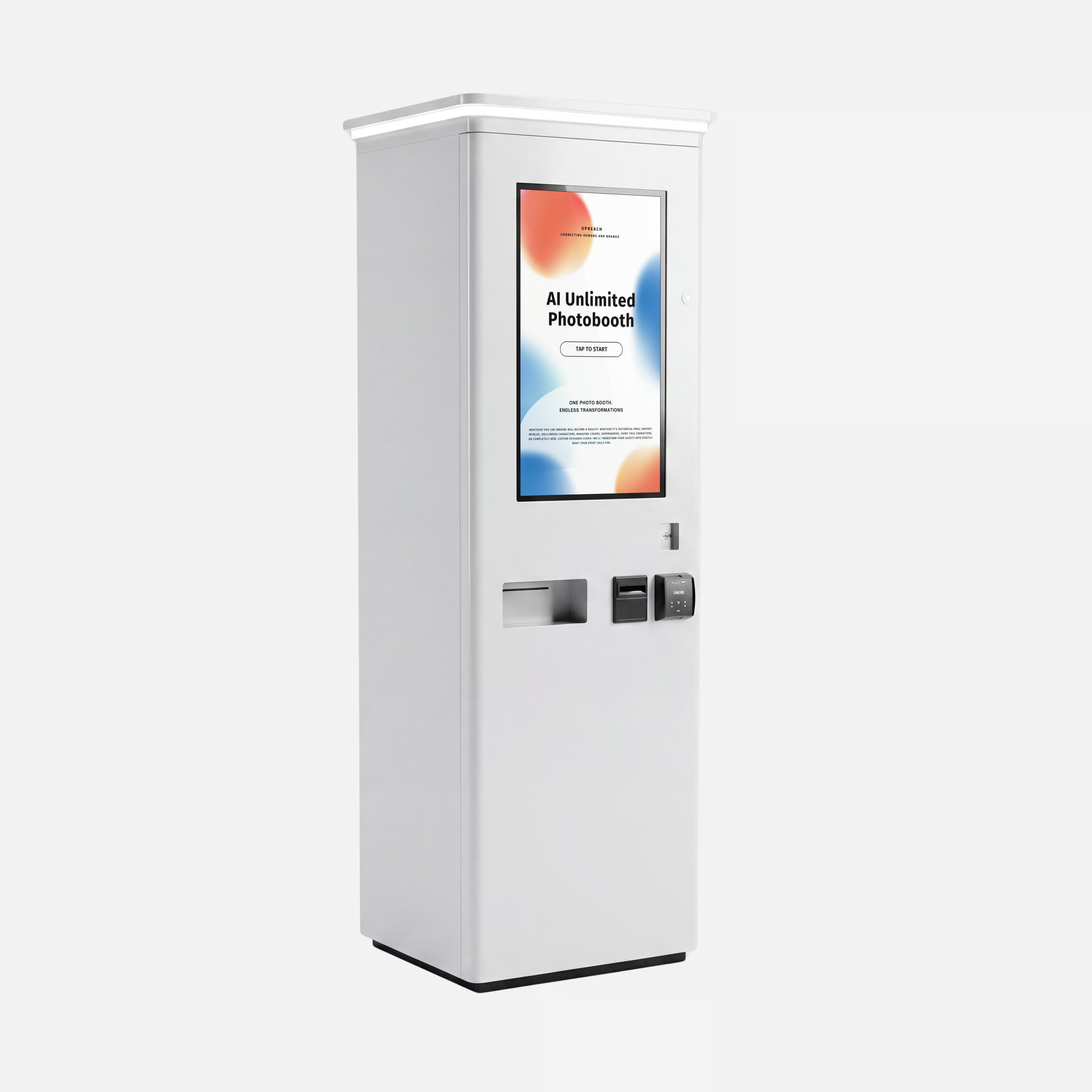
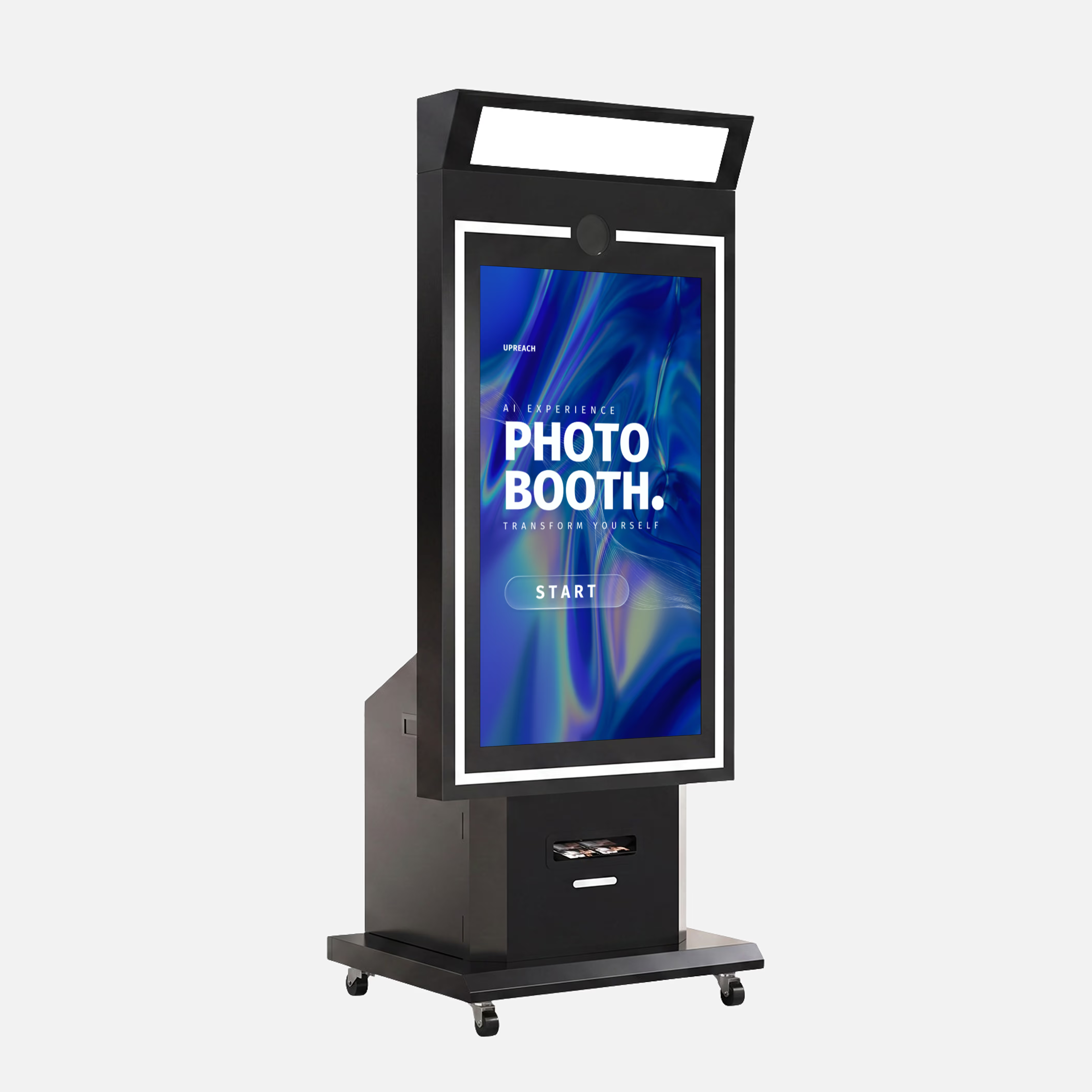
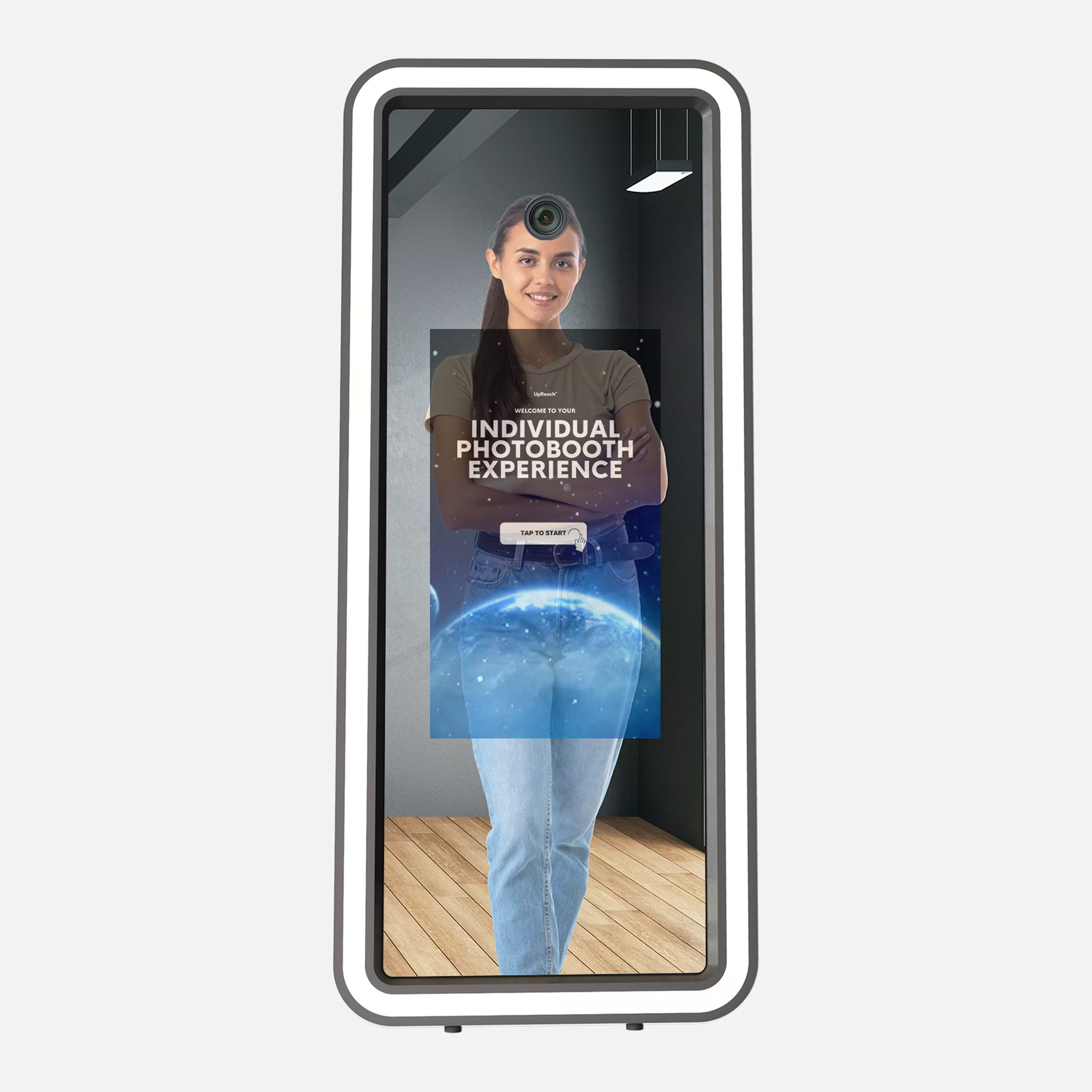
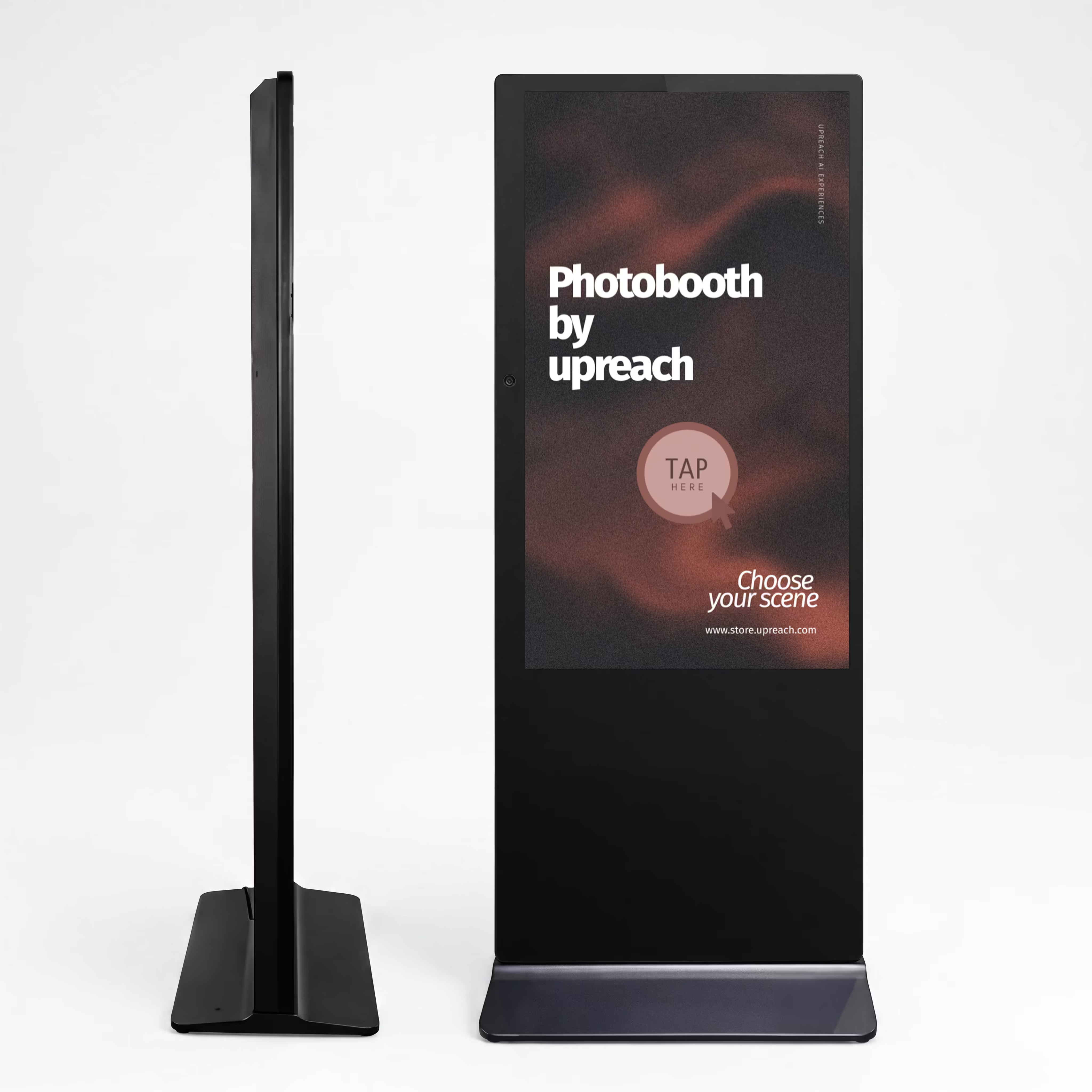
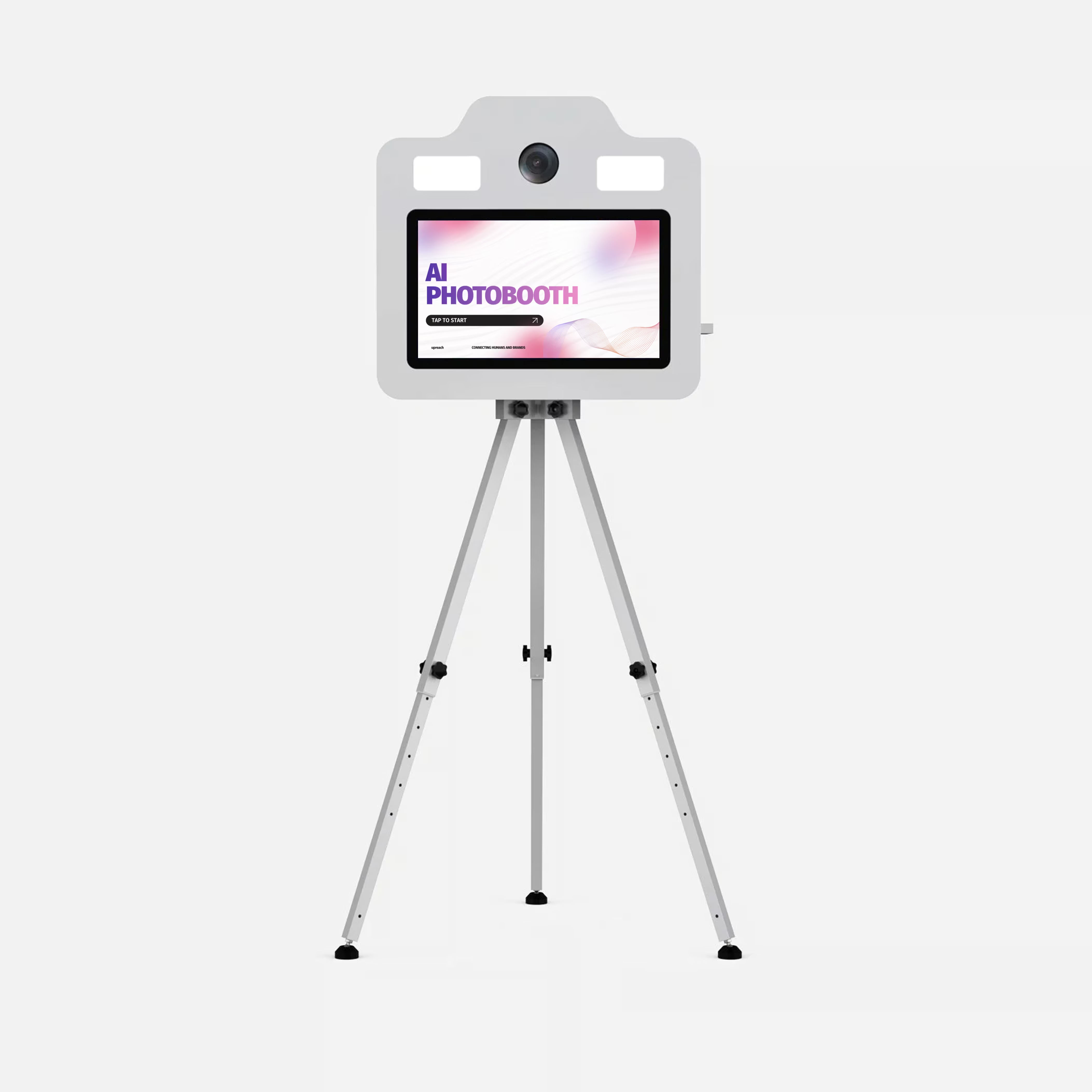
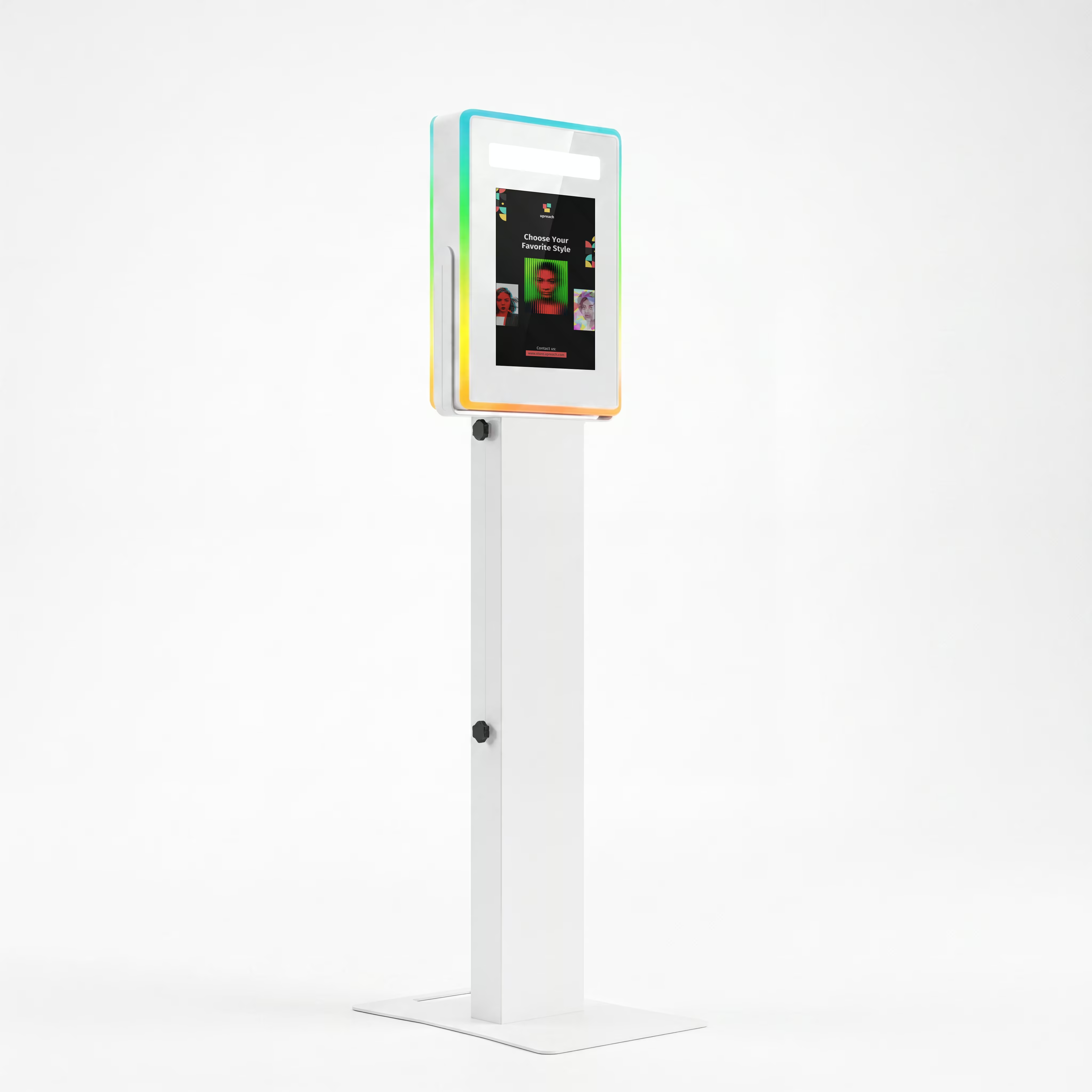
AI photo booth — the standard for live marketing — AI features, GDPR data gating, CRM push. Mirror booth — for premium formats and brand spaces — a full-height mirror surface as a design element. 360-degree photo booth — for formats with high social reach — surround video with automatic editing. Selfie station — the compact touchpoint for small stand areas.
Projects with measurable results



Common questions about live marketing
Event marketing describes the occasion, live marketing the mechanic inside it. The difference is measurability: an event can feel successful and still leave not a single usable record behind. Live marketing in the sense meant here means every interaction produces a documented consent and a CRM entry — otherwise it stays visibility without proof.
With data gating placed correctly — before the image output — B2B events regularly deliver between 60 and 80 per cent. With the form behind the output, the rate drops below 30 per cent. The second lever is the number of fields: every additional mandatory field lowers conversion by roughly 15 per cent. We recommend three fields plus separate consents.
No. The system arrives pre-configured in a flight case, runs in kiosk mode and starts with your campaign once it is plugged in. Setup takes under 15 minutes and needs no IT knowledge. Support runs by phone and through cloud access; changes to a running station are pushed remotely. An on-site technician service is bookable as an option.
The consent flow separates the purposes: contact data, image rights and marketing are individual checkboxes, none pre-ticked. Every lead carries a cryptographically secured timestamp. You decide which fields are captured and how long the data is retained. On request we provide a data processing agreement and technical documentation of the data flows.
Rental is quoted per project: period, hardware class, AI configuration and logistics. To buy, the Compact starts at €4,990 net and the Pro V1 at €6,990 net — each including the software ecosystem for 12 months, then an annual contract. AI modules are modular and booked on a credit basis. All prices excl. VAT.
Yes. The dashboard delivers interactions, opt-in rate, cost per lead and sharing rate in real time; the post-event report adds a CSV or REST API feed for Tableau or PowerBI. Multiplied by your historical sales conversion and average deal size, that gives the pipeline value — the number the budget conversation asks for.
Need further assistance?
Our team will respond within 48 hours.